
Clean and test
The surface is cleaned, decontaminated, and tested so the oxidation can be separated from staining, buildup, or deeper damage.
Oxidation is the faded, chalky layer that develops as gelcoat weathers under sun, salt, and repeated exposure. Mighty Munch removes it in controlled stages, restores clarity, and protects the corrected finish.
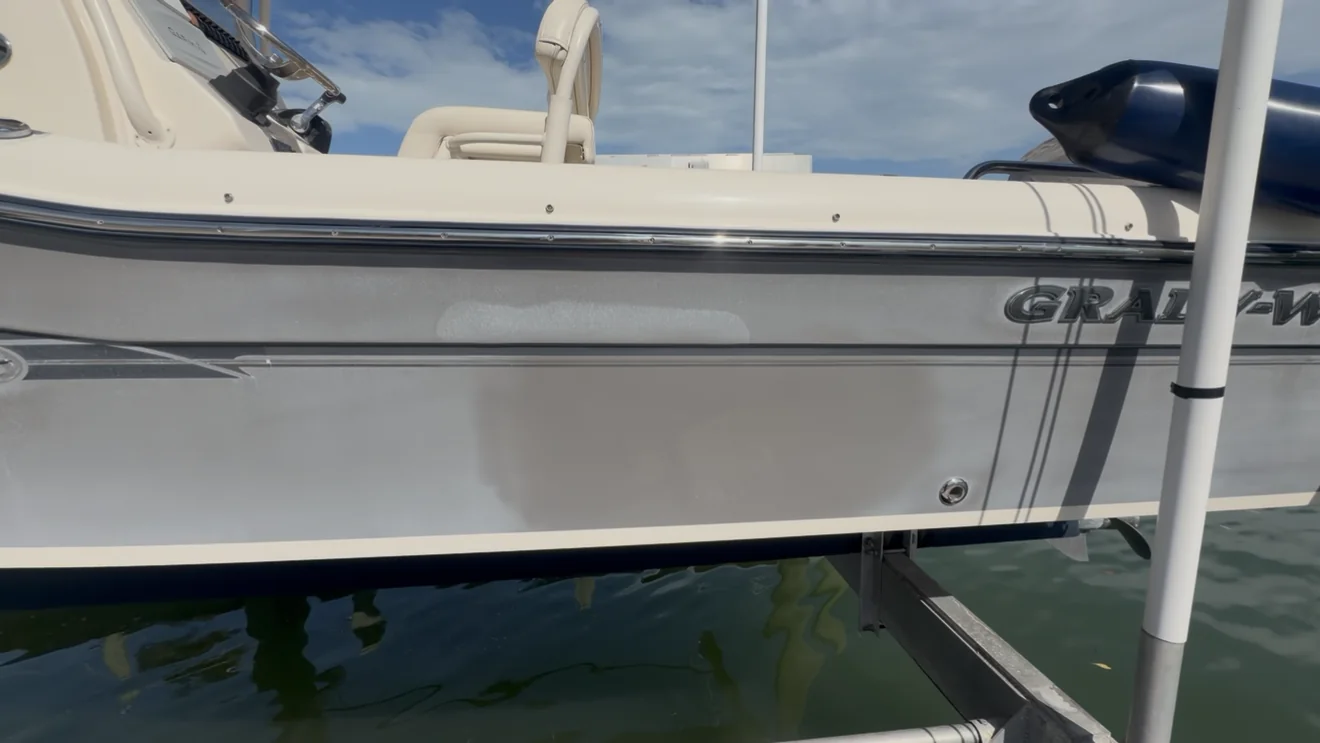
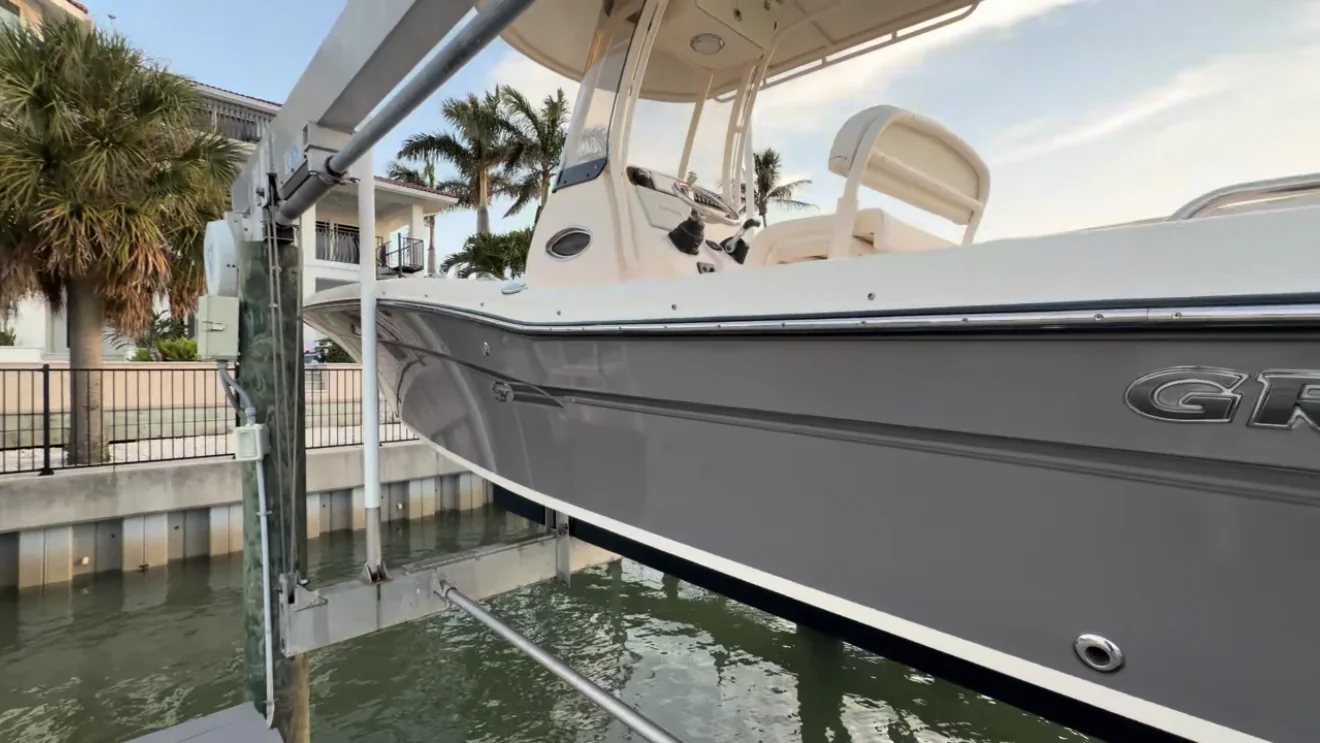
Oxidation is weathered gelcoat at the surface. It can look dull, cloudy, faded, or chalky, and normal washing will not bring the gloss back. The correction level depends on how deep that weathering has progressed.
Talk through the projectProfessional marine correction, protection, coating, and maintenance processes.
The process starts with the least aggressive effective correction and moves deeper only when the gelcoat requires it.
The surface is cleaned, decontaminated, and tested so the oxidation can be separated from staining, buildup, or deeper damage.
Compounding and polishing remove lighter oxidation. Heavier weathering may require controlled sanding before compounding, but sanding is never automatic.
The corrected gelcoat is refined for clarity, then protected with a polymer sealant or a properly prepared marine ceramic coating system.
The before and after images show the same owner-confirmed project. The close-up shows the restored finish in natural boatyard light.
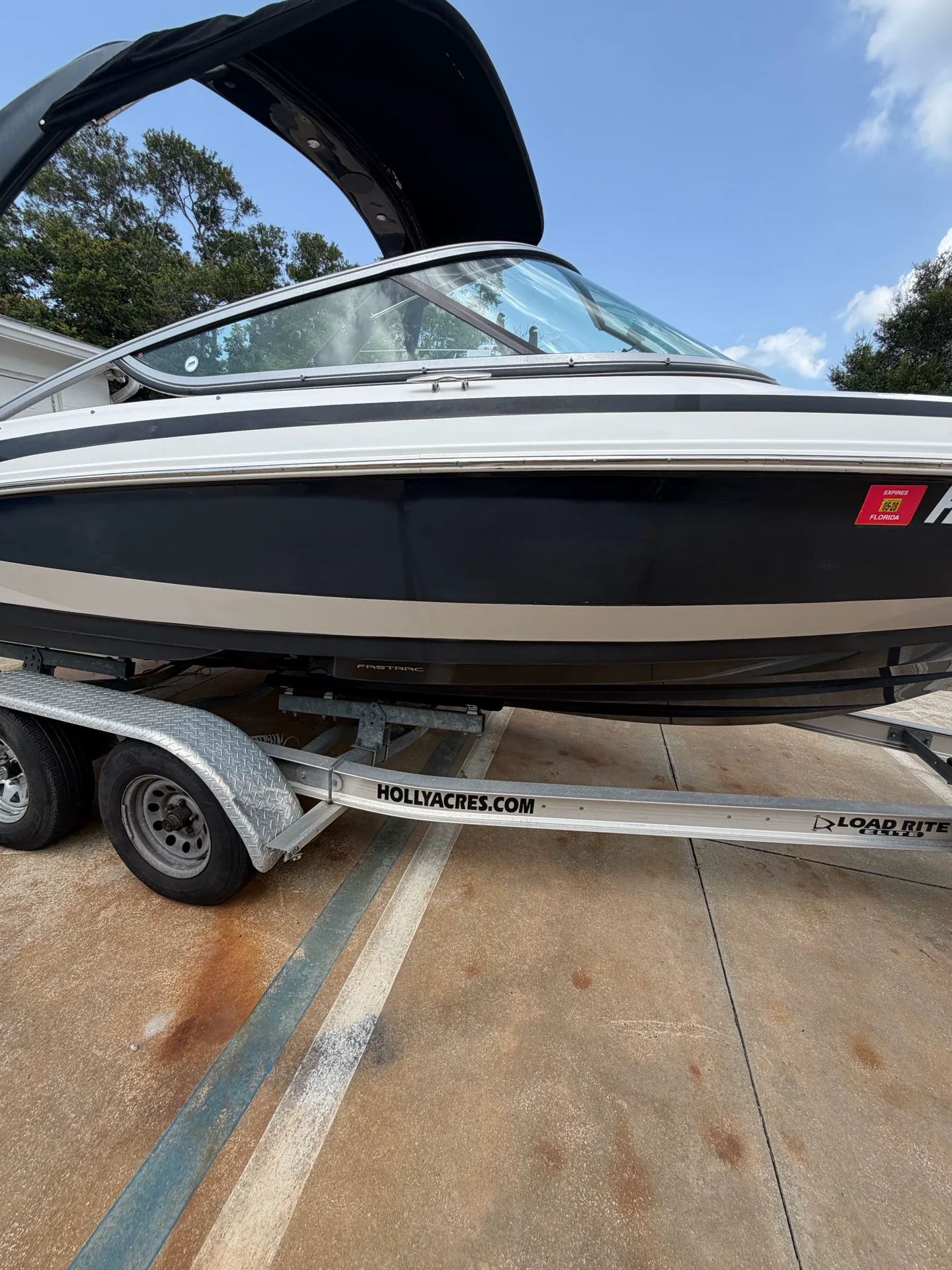
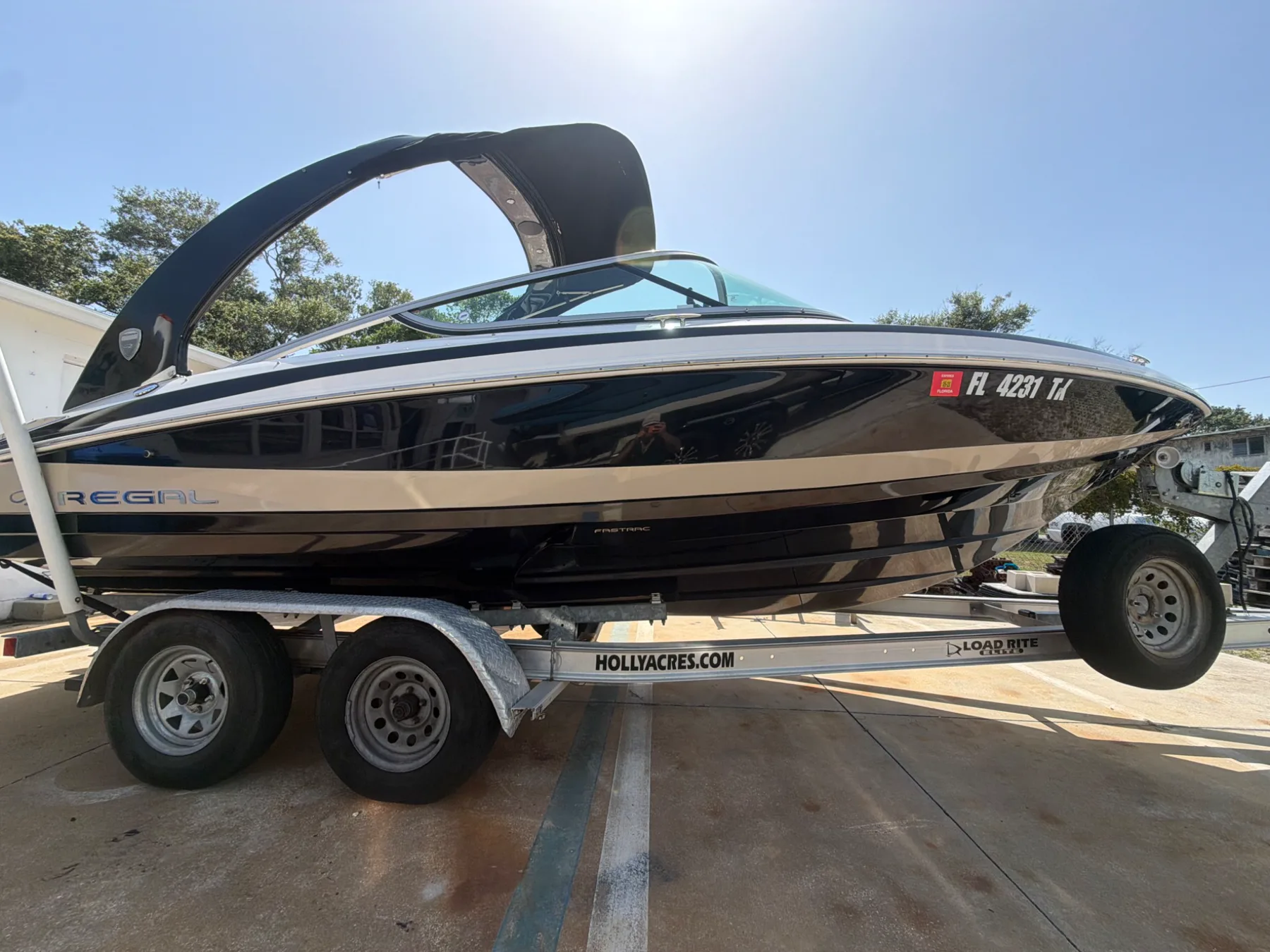
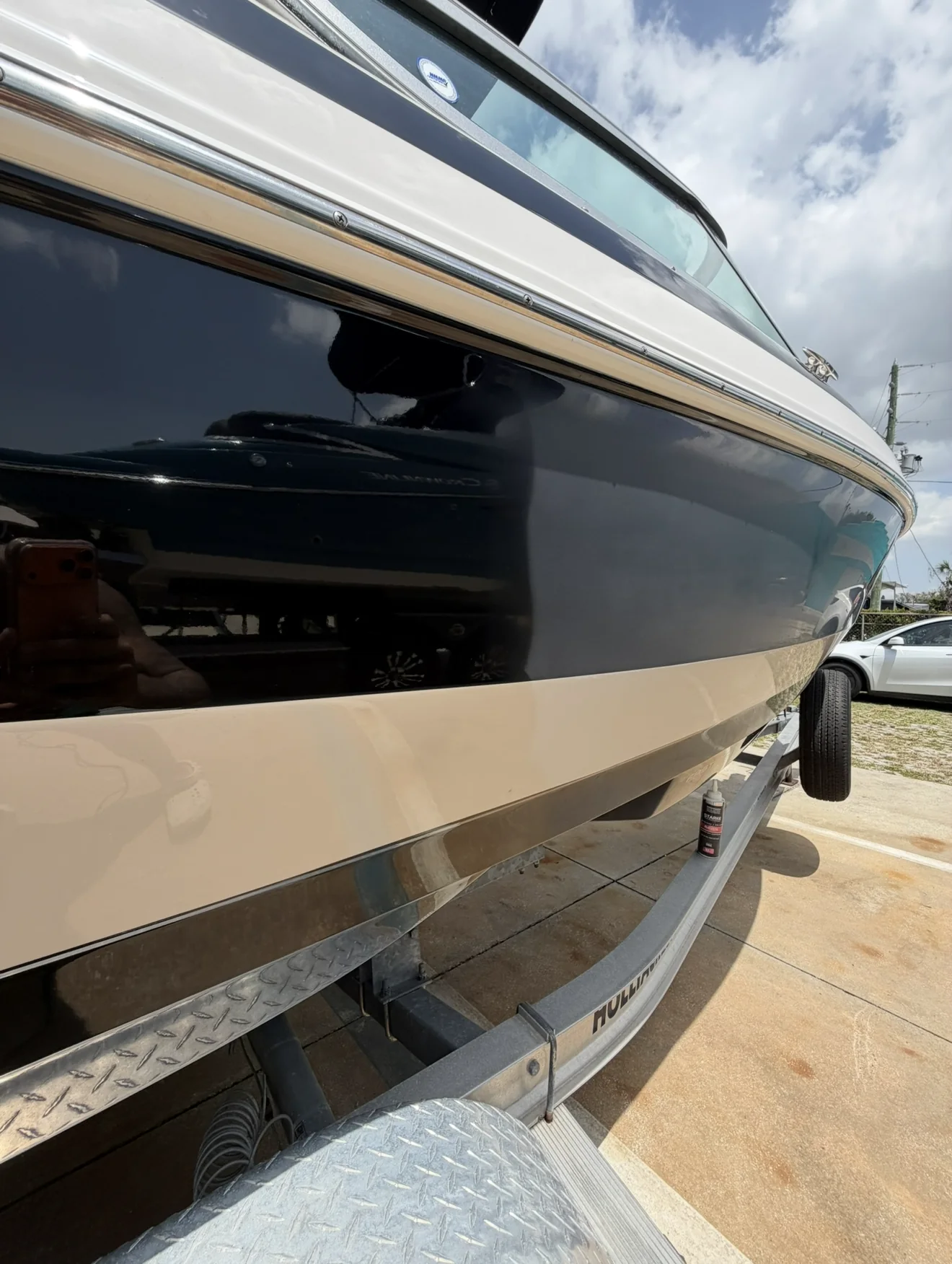
Protection helps preserve the correction and makes routine care more manageable.
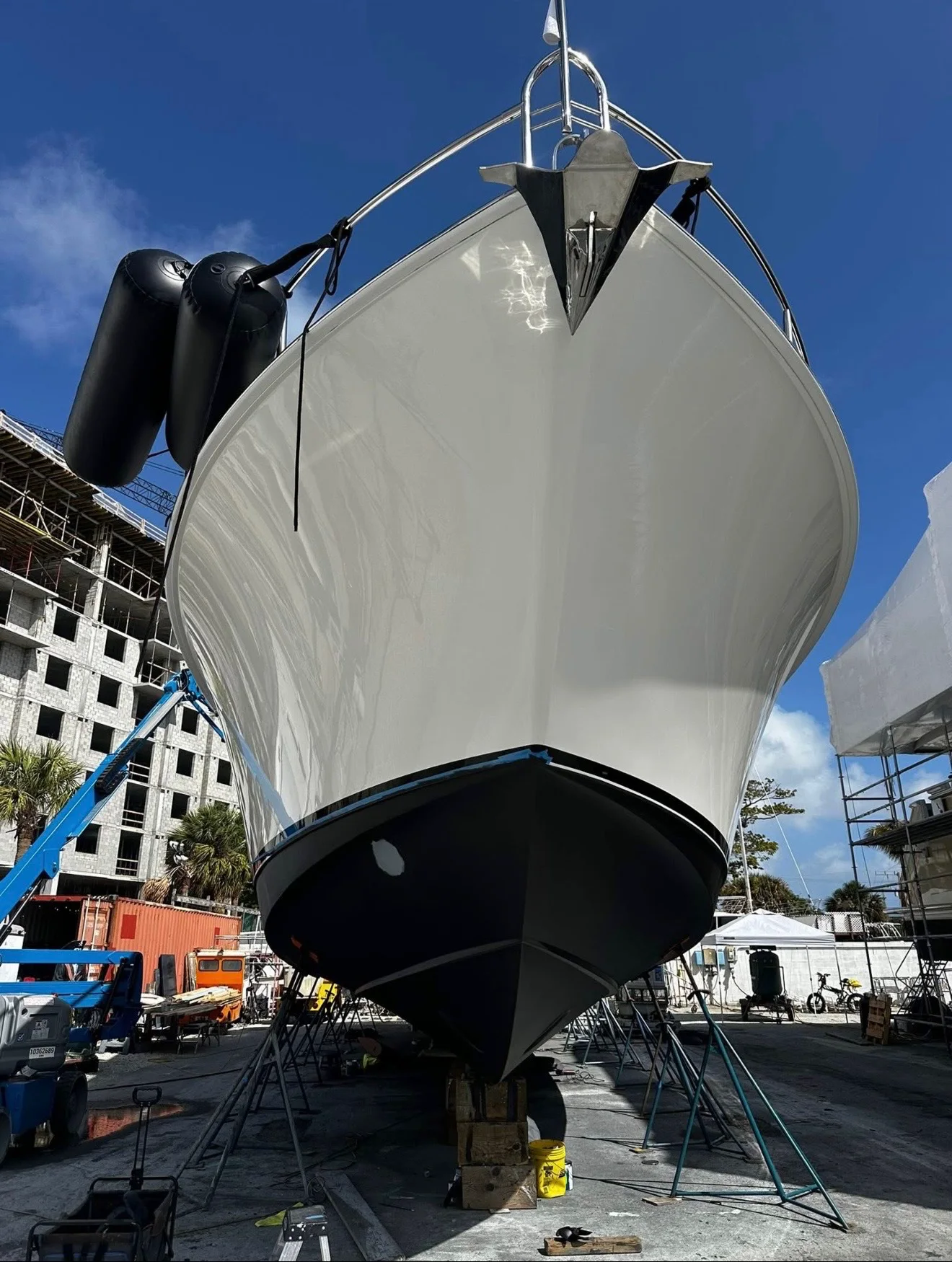
Open the full quote form and share the boat, length, location, condition, access, and result you want.
The final scope follows the actual vessel, accessible surfaces, finish response, use, storage, and protection goals.
Request a condition-based quoteOxidized gelcoat can appear faded, cloudy, chalky, rough, or unable to hold gloss after normal washing. Staining and mineral buildup are assessed separately.
No universal result can be promised. Improvement depends on gelcoat condition, depth of weathering, prior repairs, available material, damage, access, and response to a test section.
No. Polishing and compound correction are tested first. Wet sanding is reserved for suitable surfaces that need deeper leveling.
Polymer sealant or a properly prepared marine ceramic coating can follow, depending on the finish, boat use, storage, aftercare, and owner priorities.
Tell us about the vessel, its condition, where it is kept, and the result you want.